
The largest IPO in history is here, and for the first time retail investors have real access. The exciting part isn't only getting shares — it's that a brand-new listing hands you a clean, repeatable setup once you know what to wait for.
Below is the simple playbook a trading desk uses to find a high-quality entry on a stock with no history — so you can approach $SPCX with structure and confidence.
The Best Entry Sets Up Just After Listing
On day one, an IPO is an auction with no history yet — no prior support, no resistance, no established value. That first candle is mostly sentiment and allocation flow. The good news: you don't need to catch it.
Within a few sessions the stock starts printing real structure you can act on — and that is exactly where the high-probability entry lives. A little patience here is your edge, not a limitation.
Where the Real Opportunity Lives: Structure, Right After Listing
Once a new ticker trades for a few sessions, something useful happens: it starts building real structure. The first genuine order block prints. A value area forms where actual volume changes hands. A point of control (POC) emerges — the price level the market keeps returning to.
That is data you can act on. Not a narrative — a mechanical reference the market itself created. The desk's edge is patience: let the noise resolve into structure, then trade the structure.
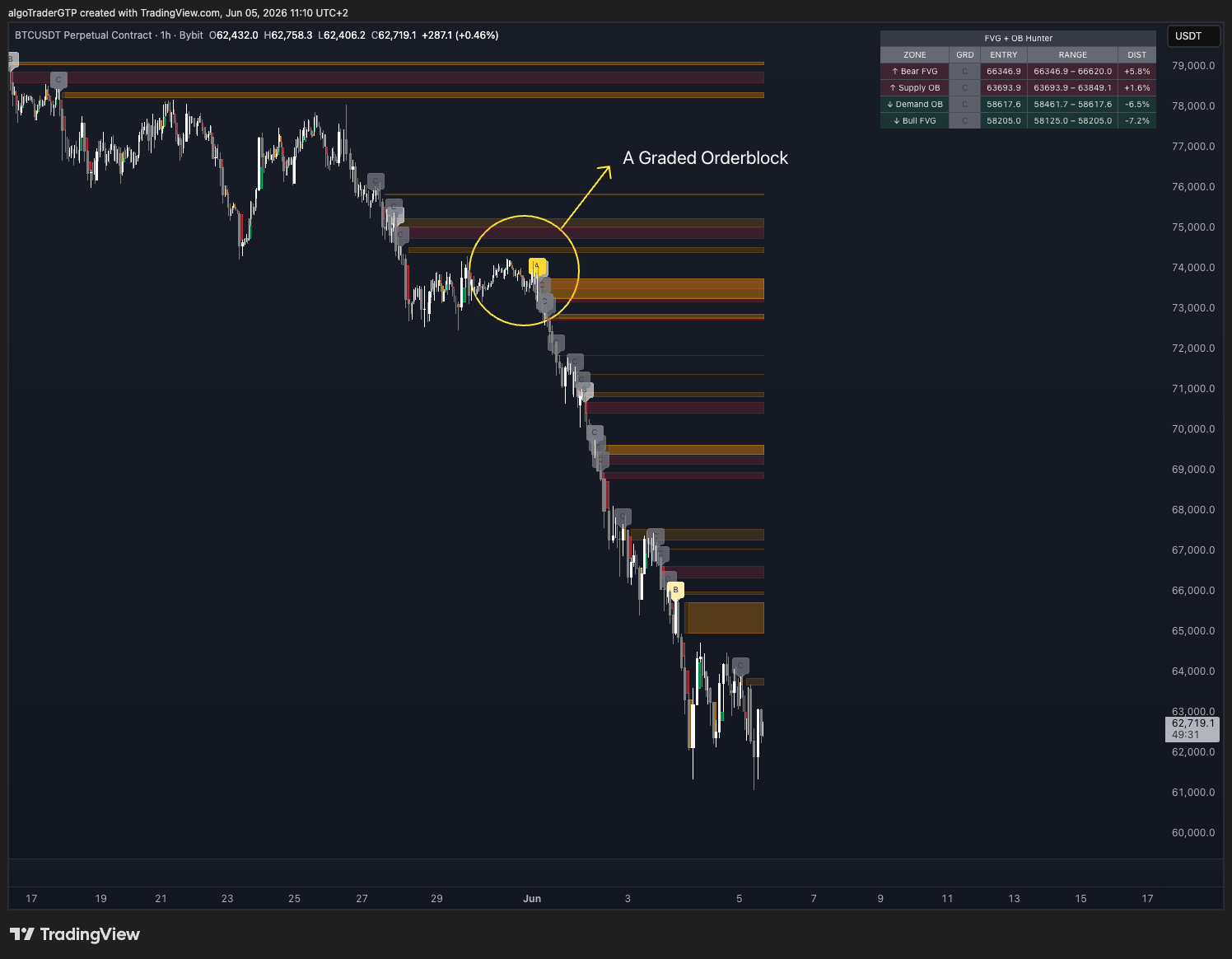
The Post-Listing Playbook
- Wait. Skip the open. Let the first sessions print real candles.
- Mark the first clean order block — the last down-move before a strong rally (or the last up-move before a strong drop).
- Map the value area and POC — where real volume transacted, not where the wick spiked.
- Enter on the retest of that zone, with confluence — never at the open. Your stop goes just beyond the block, so the trade is invalidated by structure, not by emotion.
Structure first, story second. The story got you interested; the structure is what you actually trade.
This is educational, not financial advice. Newly listed IPO stocks are exceptionally volatile and can move violently against any setup. Nothing here is a recommendation to buy or sell any security. Manage risk and size positions accordingly.
How We Automate the Structure
Marking order blocks and value areas by hand on a fast, brand-new ticker is where most traders fall behind. Two tools do it automatically:
- FVG+OB Hunter detects every order block and fair value gap the moment it forms, grades each zone by strength, and alerts you when price returns to it.
- Volume Profile Pro maps the value area and point of control so you enter where volume actually transacted — the only objective reference a no-history listing gives you.
Both run on TradingView. On an IPO with no past, that automated structure is the entire edge.
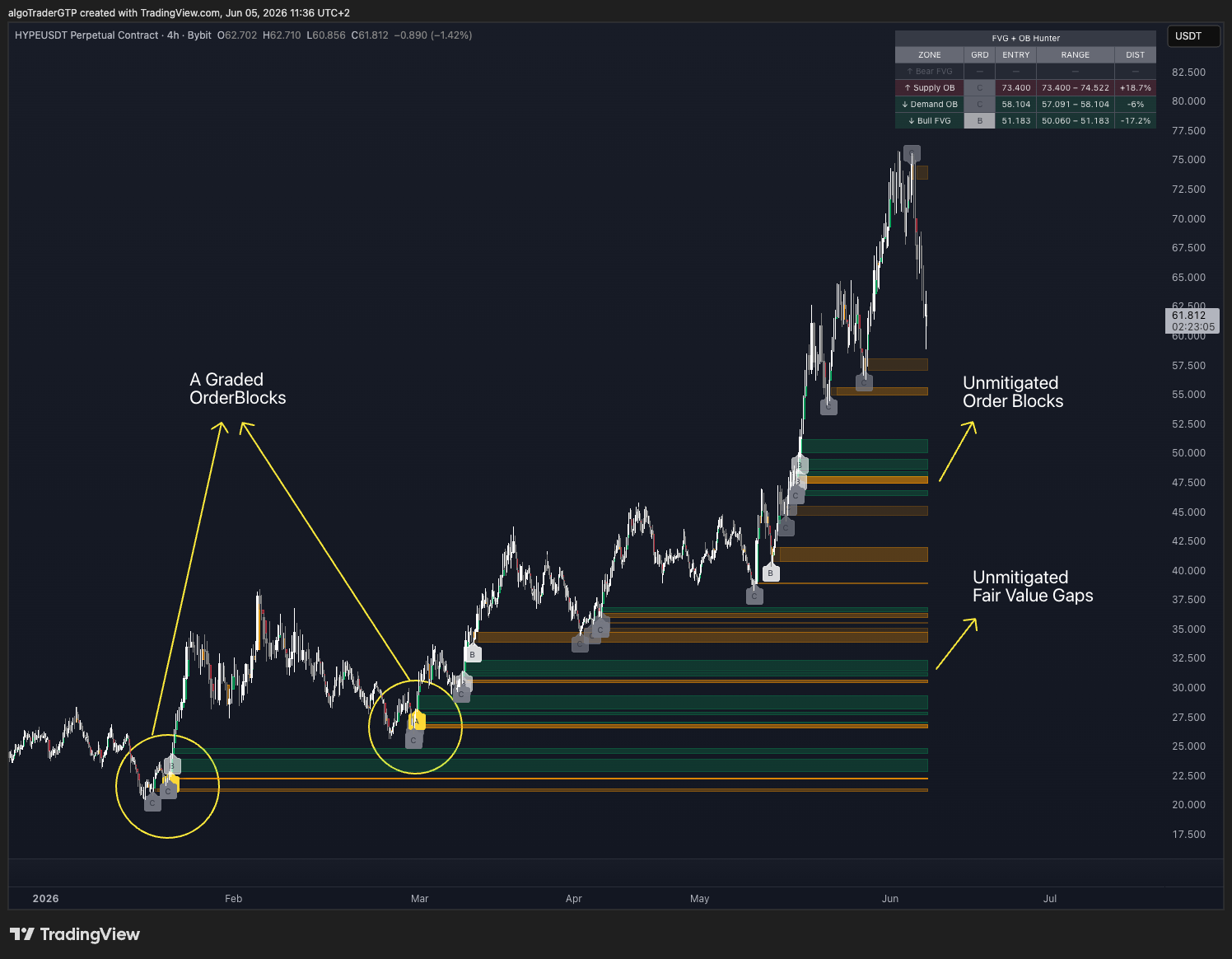
Don't Want to Chart It Yourself?
Our desk runs this exact methodology live — same rules, every session — through the AlgoTraderPro signal service. You get the setups without drawing them yourself. See how the signals work.
And if you simply want to participate in the offering: retail access is now available through major brokers (Fidelity, Robinhood, E*TRADE and others). But remember — securing shares is step one. The plan for what to do once it trades is what actually matters.
Trade it with structure and confidence — let the order block show you the entry. Disclosure: some links above are affiliate or product links — if you buy through them, AlgoTraderPro may earn a commission at no extra cost to you.