
Some Fair Value Gaps act like a wall — price returns, reacts, and the move continues. Others get cut straight through. The good news: the difference isn't luck, and you can read it on the chart before price ever arrives.
To prove it rather than assert it, we ran the numbers through our own backtest engine: more than 5,400 Fair Value Gaps across five major coins (BTC, ETH, SOL, BNB and XRP) on the 1-hour chart, over two years. Here's what the data says about which gaps hold — and exactly how to find them.
Step 1: Grade Every Gap by Size
If you're new to the concept, our companion guide covers how Fair Value Gaps actually work. Here we're focused on one thing: separating the gaps worth waiting for from the noise. And the single biggest tell is size relative to volatility.
Divide a zone's size by ATR(14) and you get a grade:
- Grade A (≥ 1.0× ATR) — an institutional-sized imbalance
- Grade B (≥ 0.5× ATR) — moderate, worth watching at confluence
- Grade C (< 0.5× ATR) — minor, low conviction on its own
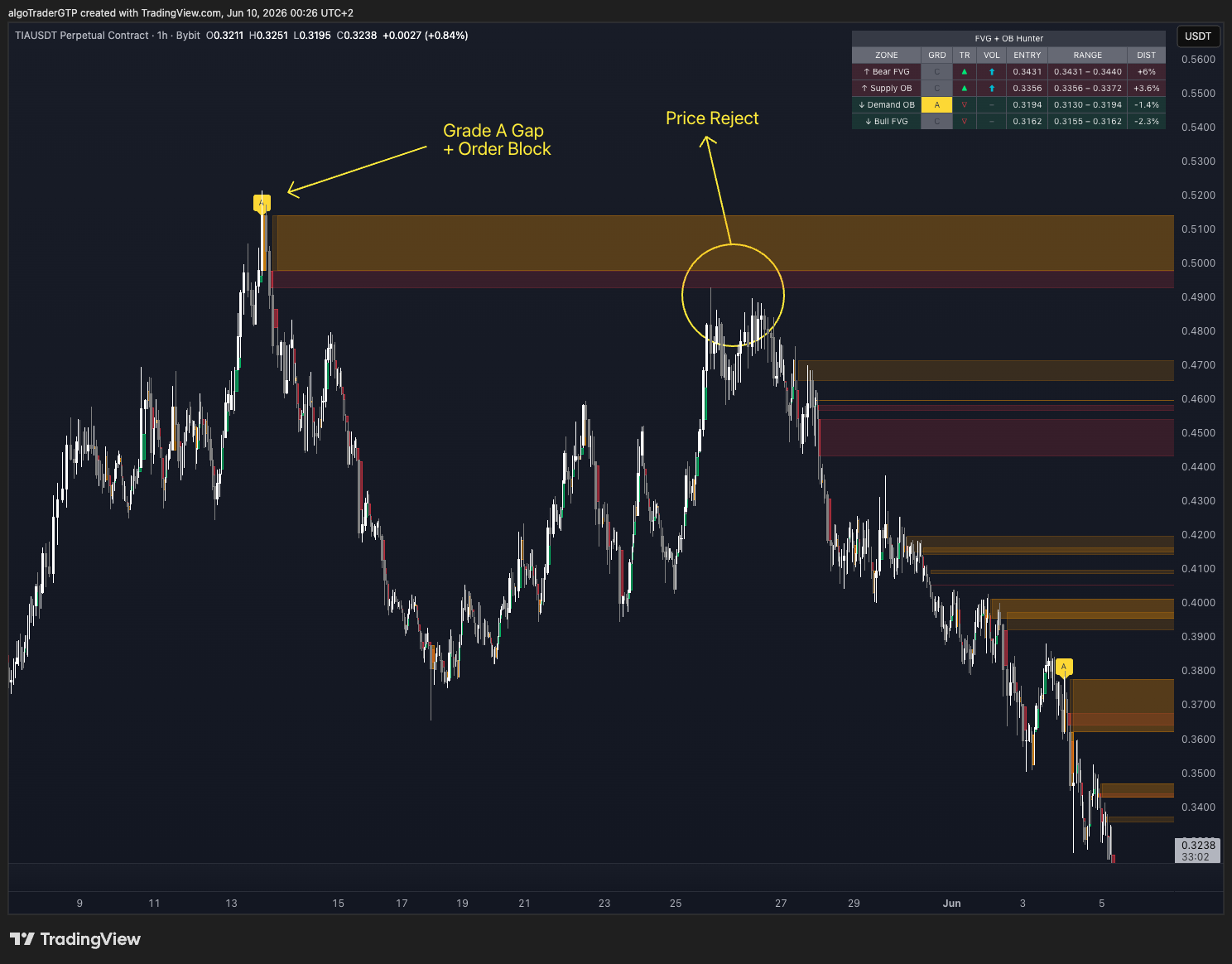
In our two-year study, this one filter did most of the work. A-grade gaps held as support or resistance about half the time when price touched them (~53%). C-grade gaps held only about one in five (~20%). Same indicator, same coins — the only difference is how large the gap is relative to current volatility.
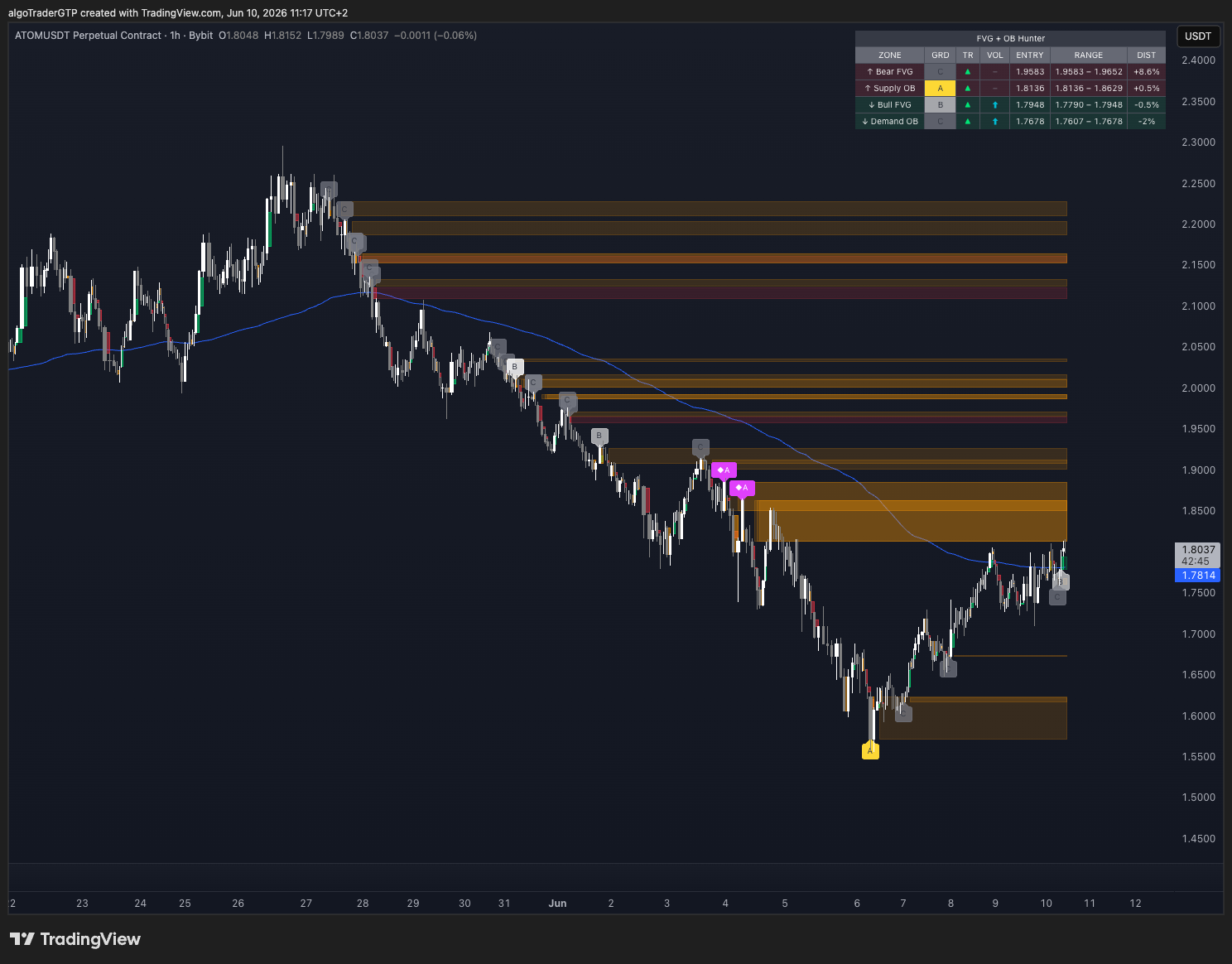
What 5,468 Fair Value Gaps Showed
We measured every Fair Value Gap the indicator detected across the five coins — 5,468 in total — and tracked whether each held as support or resistance or was filled straight through. Here is the result, by grade (standalone Fair Value Gaps):
| Grade | Hold rate (range / avg) | EV @ 2R (range / avg) | Break-even R | Sample (n) |
|---|---|---|---|---|
| A (≥1.0× ATR) | 48.6–56.2% / ~53% | +0.37R to +0.54R / ~+0.48R | 0.8–1.1R | 843 |
| B (≥0.5× ATR) | 27.1–38.0% / ~32% | −0.15R to +0.11R / ~−0.04R | 1.6–2.7R | 1,269 |
| C (<0.5× ATR) | 17.6–22.2% / ~20% | −0.39R to −0.27R / ~−0.34R | 3.5–4.7R | 3,356 |
Standalone Fair Value Gaps · BTC, ETH, SOL, BNB, XRP · 1-hour · 24 months. FVG+OB confluence held best of all at Grade A.
Grade is the filter. Move from C to A and the hold rate roughly triples — and the expected-value math flips from a losing trade into a winning one. That's the whole edge in one table: trade A-grade structure, treat C as noise.
On confidence: with hundreds to thousands of zones per grade, the gap between A and C is far larger than sampling noise — not a small-sample fluke. Honest caveats: the zones aren't fully independent (overlapping windows, five correlated assets, a single 24-month period), so read these as a strong directional edge rather than exact probabilities, and past behavior never guarantees future results.
Step 2: Add Order Block Confluence
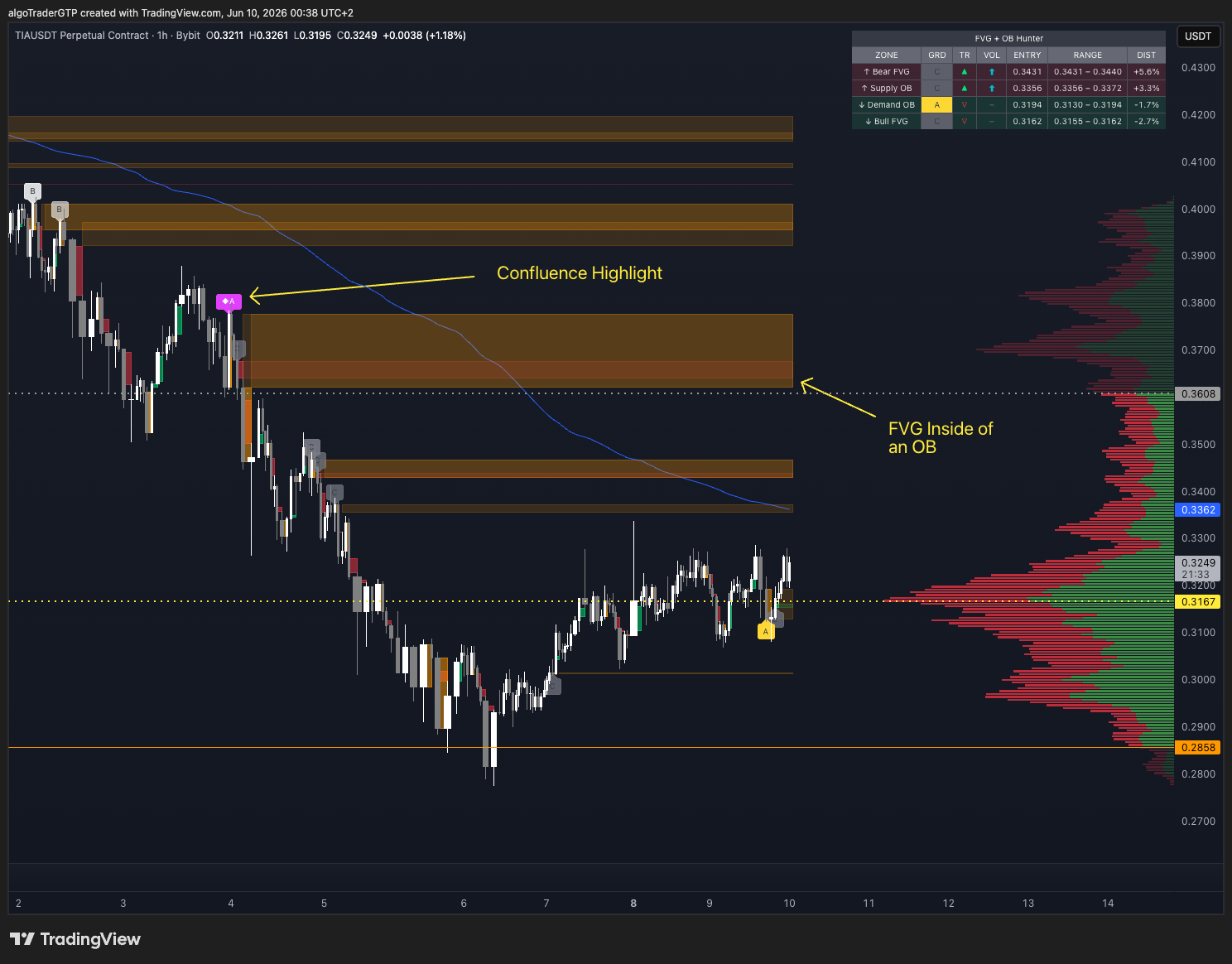
An Order Block is the last opposing candle before a strong move — the level where institutions loaded up before the impulse, and where they tend to defend price again. When a Fair Value Gap forms inside or directly beside an Order Block, two references line up: the OB shows where institutional entries sat, and the FVG marks the exact void they left behind.
In the data, this confluence was the strongest tier at Grade A — the FVG+OB combination and standalone Order Blocks generally held better than a lone gap. It varies by asset, so treat it as a tilt in your favor rather than a guarantee — but the direction of the evidence is consistent.
The setup worth waiting for: an A-grade Fair Value Gap nested inside or beside an Order Block, ideally at a higher-timeframe level. The grade filters out the noise, the Order Block adds confluence, and the higher-timeframe level gives you the reason.
The Expected-Value Reality (Why Small Gaps Are a Trap)
Hold rate is only half the picture — expected value is the other half. Using the historical hold and fill rates, the math is stark. Across all five coins, every A-grade zone carried positive expected value at a 2:1 reward-to-risk. Every C-grade zone was negative at 2R — needing roughly 3.5 to 4.7R just to break even.
That's why a small gap can ‘work’ often enough to feel tradeable and still bleed an account: the times it fails, it gives back everything the wins earned. The takeaway from two years of data is refreshingly simple — favor A-grade zones, lean on Order Block confluence, and treat C-grade gaps as low conviction. One more note from our own testing: stacking a trend and volume filter on top of grade barely moved the A-grade hold rate, so we treat trend and volume as useful context, not as the edge itself. Grade and confluence are the edge.
This is educational, not financial advice. Backtested statistics describe historical zone behavior and do not predict future results. Nothing here is a recommendation to buy or sell any asset. Manage risk and size positions accordingly.
How We Automate It
Grading every gap by ATR, scanning for the Order Block beside it, and tracking which zones are still live across multiple timeframes is more than you can do by hand in real time. That's exactly what we built FVG+OB Hunter to do:
- Detects every Bullish and Bearish Fair Value Gap the moment it forms
- Identifies the Supply or Demand Order Block alongside each gap
- Grades every zone A / B / C by size relative to ATR — the filter the data says matters most
- Surfaces the strongest A-grade, trend-aligned, volume-elevated setups automatically
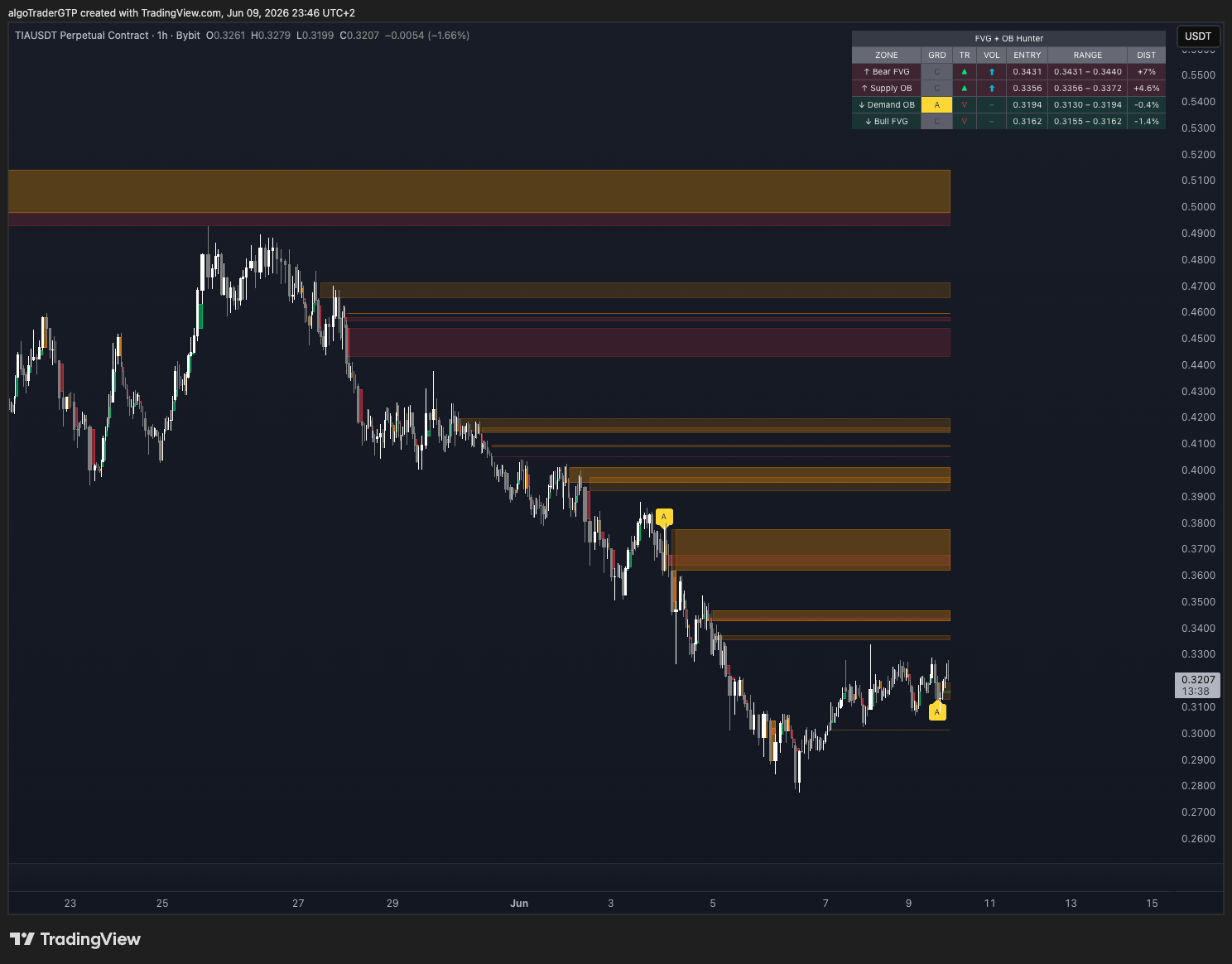
- Shows the nearest active zones above and below price in a live table, with grade, entry, range and distance
- Fires alerts when a zone forms, when price enters, and when it's mitigated
It runs on TradingView. The concept is ICT; the grading and the execution are automated.
Don't Want to Chart It Yourself?
Our desk runs this exact methodology live — same grading rules, every session — through the AlgoTraderPro signal service. You get the high-conviction setups without drawing them yourself. See how the signals work.
Trade the gaps that hold — let the grade and the Order Block show you which ones are worth waiting for. Disclosure: some links above are affiliate or product links — if you buy through them, AlgoTraderPro may earn a commission at no extra cost to you.